FHIR and HL7 Integration for Healthcare Systems That Have to Talk to Each Other
We build the interfaces, APIs and data pipelines that connect EHRs, apps, labs and payers. HIPAA-aligned practices, BAA available and US-hours overlap.
Designed to support HIPAASynthetic patient data while we build
BAA availableSigned before PHI access
US-region hostingPatient data stays in the US
US-hours overlap4 hours with US Eastern
100% IP ownershipYour code from day one
Standards and regulations we design toWe build to these. They are not certifications, and we do not claim any.
FHIR APIs
HL7 v2 interfaces
Designed to support HIPAA
GDPR-aligned, UK and EU
ISO 27001, in progress
Trusted by healthcare and technology teams
What we build
FHIR and HL7 Integration Services We Deliver
From a single EHR connection to a full interface layer, we build every part of how your systems exchange data. Our FHIR and HL7 integration services cover APIs, SMART apps, interface engines and clinical documents, each tested in vendor sandboxes before go-live.
FHIR API development for servers that expose your data as FHIR R4 resources and clients that read and write the APIs certified EHRs publish. US Core profiles, search, paging, validation and clear error handling are built in.
SMART on FHIR apps
SMART on FHIR app development for apps that launch inside the EHR with the clinician and patient already selected. We handle OAuth 2.0 scopes, launch context and token refresh so users never retype data.
HL7 v2 interface engines
HL7 v2 interface development for ADT, ORM and ORU feeds. Messages are parsed, mapped, routed and acknowledged, with monitoring, alerting and replay when a message fails, so older hospital systems keep working.
C-CDA and CDA document exchange
C-CDA and CDA document exchange for referrals, discharges and transitions of care. We generate, parse and reconcile clinical documents so medications, problems and allergies land in the right place in the receiving record.
EHR integrations
EHR integration services for Epic, Oracle Health, athenahealth and eClinicalWorks, built through the access path each vendor offers. We test in vendor sandboxes and plan for app review before go-live.
HIE and TEFCA connectivity
HIE integration and TEFCA connectivity for sharing records with health information exchanges and national networks. We map your data to the formats exchanges expect and plan consent, patient matching and audit needs early.
Master patient index and data migration
Master patient index and healthcare data migration. We match patient identities across systems, resolve duplicates and move records between systems with validation and a rollback plan, so clinical history is not lost.
Who this is for
Built for Teams That Need Their Systems Connected
Most of our integration work starts with one of these four situations.
Health-tech startups that need EHR connectivity
Clinics will not buy until your product reads and writes the data in their EHR.
Clinics replacing point-to-point interfaces
Fragile one-off feeds become one managed interface layer you can monitor.
Digital health apps launching with a provider
Your launch partner needs the app working inside their workflow from day one.
Payers exposing patient access and prior authorization APIs
FHIR APIs that members, providers and partner apps can use.
A real integration story
We Connected a Telehealth App to a National Health System
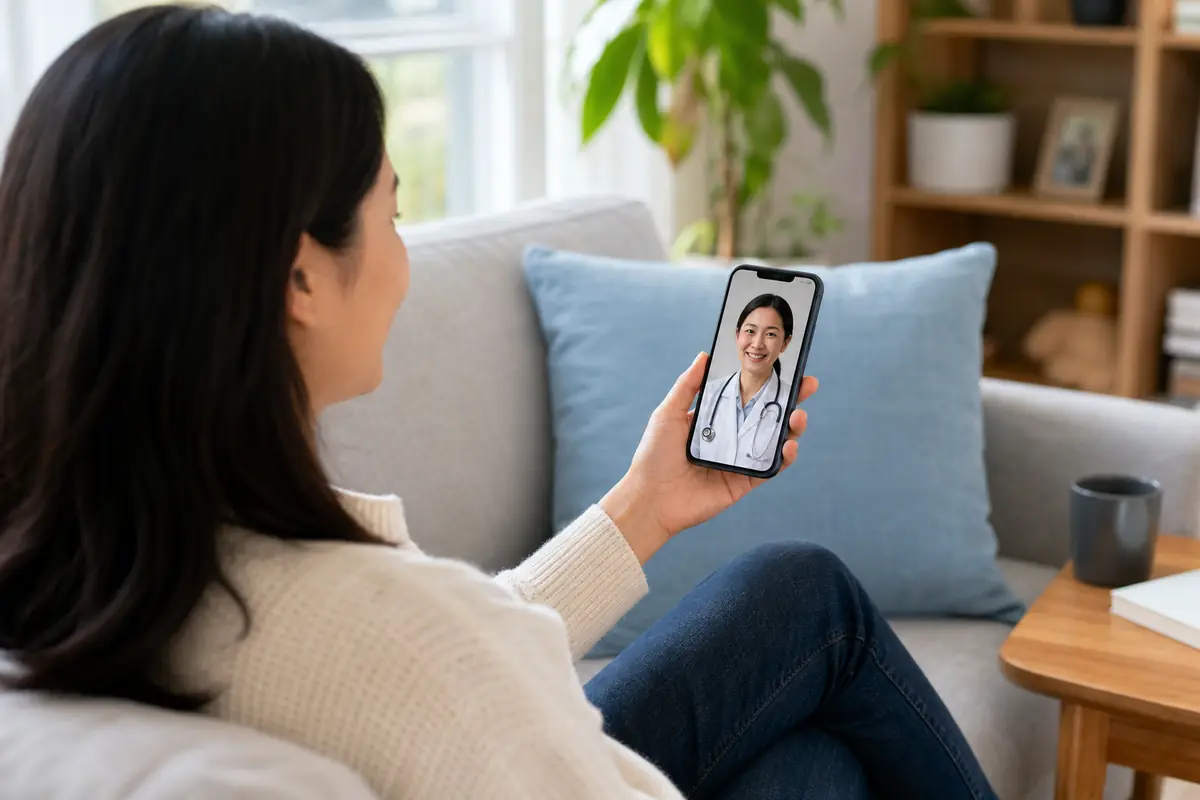
When a doctor prescribes during a video visit, three outside systems have to answer within seconds. We built all three connections for DinkumDoc, an Australian telehealth platform, and MyDrScripts, an Australian e-prescribing platform.
Is the patient covered?
The app checks cover and sends the claim, so the visit gets paid without paperwork.
We connected Medicare APIsUS: eligibility and claims via clearinghouses
Is the medicine safe?
The app looks up the drug, dose and interactions, so the doctor prescribes with full information.
We connected MIMS drug databaseUS: First Databank, Medi-Span or RxNorm
Send the prescription
The prescription goes straight to the patient's chosen pharmacy. No paper, no phone calls.
We connected eRx script exchangeUS: Surescripts, through an e-prescribing partner
Where we built it
A US telehealth product that prescribes needs the same three connections. US names are the common options, not our partners; we have not yet integrated a US e-prescribing network.
Free calculator
Know What Your Healthcare App Will Cost Before You Build
Answer a few questions about your product and get a realistic cost range in about two minutes. Compare traditional and AI-first delivery side by side.
TLS on every connection and encrypted storage for messages and logs.
Audit logging
Who accessed which record, when, and from where, kept for review.
Role-based access
Each user and service sees only the data its role needs.
Least privilege
Production access is limited, approved and time-bound.
US-region hosting
Patient data stays in US cloud regions, in your account by default.
BAA available
We sign a Business Associate Agreement before any access to PHI.
Frequently Asked Questions
What is the difference between FHIR and HL7 v2?
HL7 v2 is the older message format that most hospital systems still use for events such as admissions, orders and results. FHIR is the newer standard, built on REST APIs and JSON, and it is what certified EHRs and modern apps expose. Most real projects need both: FHIR for app access and HL7 v2 for feeds from older systems.
Can you integrate with Epic?
Yes, through the access path Epic offers for your use case. Epic access depends on your organization's or your customer's relationship with Epic, and many integrations need app review in Epic's developer program. We build to that program's requirements and test in the sandbox it provides.
How long does an integration take?
It depends on the systems, the data and the vendor approval steps. After discovery you get a written plan with a timeline range. Vendor reviews and test access can add time that sits outside our control, and we show that in the plan.
Do you sign a BAA?
Yes. When our team will create, receive, maintain or transmit protected health information for you, we sign a Business Associate Agreement before any access to PHI.
Where is PHI hosted and who can access it?
In US cloud regions, in your own account by default. We build and test with synthetic data. When an engineer needs access to PHI, it happens through controlled, logged environments with multi-factor authentication and least-privilege roles, never on local machines.
Do you work on US hours?
Yes. Our engineers are in India and keep at least four hours of overlap with US Eastern time, with a named lead on your calls.
Should we use an integration engine or build custom interfaces?
It depends on how many connections you need, your message volume and who will maintain them. An integration engine such as Mirth Connect often suits many similar HL7 v2 feeds, while custom interfaces suit unusual workflows or APIs. We compare the options for your case in discovery and tell you plainly if an existing tool is enough.
Does my integration need ONC certification?
ONC certification is voluntary. It matters mainly for products sold as certified EHR technology, or where a buyer's program requires it, and many integrations do not need it. We help you work out whether yours does early in discovery. We do not hold ONC certification and we are not a certification body.
Can you migrate data from our existing system?
Yes, as a separate workstream. We start with a sample extraction to see what can be extracted, how it maps to the new data model and what effort is involved, before we agree a full migration plan.
Who owns the code and the data mappings?
You do, from day one, with no licence fee after delivery.
Can we take the integration in-house later?
Yes. You receive the source code, interface specifications, data mappings, tests and a runbook, so your team or another vendor can operate and extend it.
Talk to a senior engineer
Get a Free Integration Feasibility Check
Tell us which systems need to talk. A senior engineer will review your setup, the access paths each vendor offers and what a realistic plan looks like.
Talk to our healthcare engineers and get a tailored proposal.
After a 30-minute call you receive a detailed proposal covering scope, timeline and investment, with no obligation.
Detailed proposal before you commit
1-week risk-free trial
You own all code from day one
Safeguards designed to support HIPAA. BAA available.Senior engineers on your US hours. You own 100% of the code. Not ready yet? Try the cost calculator.