
AI Hospital Patient Care Assistant
How we built a copilot for nurses and doctors in a busy public hospital. It checks every arrival for red flags, drafts the consultation note for the doctor to sign, and follows patients at home after discharge.
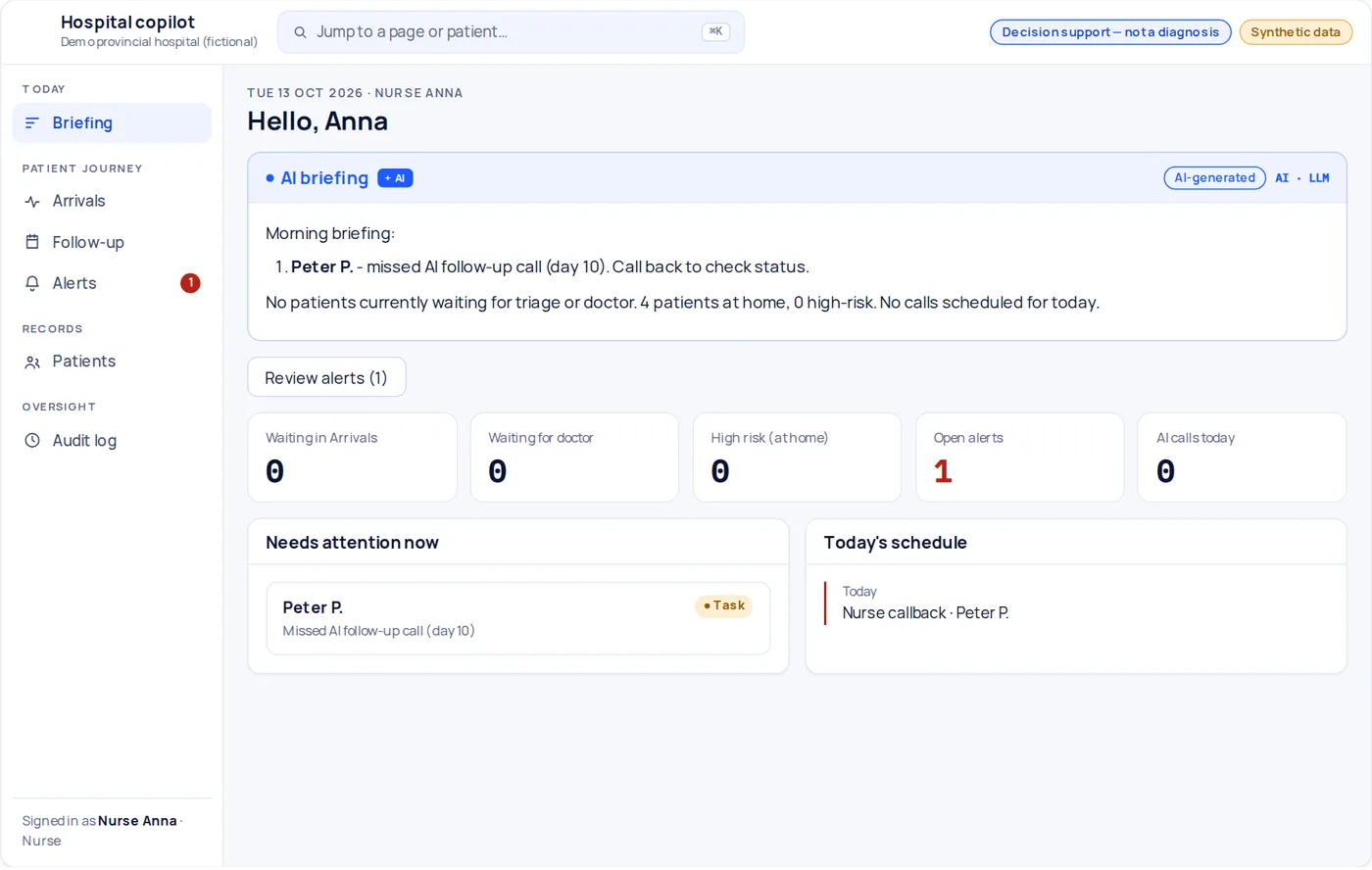
More Patients Than Staff Can Follow
Public hospitals care for more patients than their staff can follow. The gaps sit at the front door, in the consult room and after the patient goes home, where people with heart failure, COPD or diabetes can get worse quietly and return as emergencies.
The brief was to bring that scattered picture into one place, and to do it without taking the decision away from the people responsible for it.
- Triage nurses
- Doctors
- Hospital directors
Manual Work vs Generic AI vs Our Build
We designed the AI to support the people doing the work, not to replace their judgment. It reads the data, explains what it found and drafts the next step. A person makes the call.
| Aspect | Manual Process | Generic AI Chatbot | Our Build |
|---|---|---|---|
| Data | Spread across separate systems | Only what someone pastes in | Sources brought into one view |
| Decisions | A person, with part of the picture | The model answers, nobody signs off | A named person approves every action |
| Explanation | Varies by who you ask | Hard to trace | Every suggestion shows its reason |
| Fit | Familiar, but slow | Not built around the workflow | Built around 4 real workflows |
A Copilot Across the Whole Patient Journey
From the front door to a confirmed triage level. We built each workflow to end with a named person's decision. This is one of them, step by step.
Triage nurse
Adds the arrival: what the patient says and the vitals.
Fixed rules
Red-flag rules set the level: Emergency, Urgent or Routine.
AI agent
Summarises the note and states which rule fired and why.
Triage nurse
Confirms the level, or changes it with a reason.
Outcome
Patients are queued by urgency, with the reason on screen.
Arrivals
Fixed red-flag rules set each arrival to Emergency, Urgent or Routine. The assistant writes a short summary and says which rule fired.
Consultation notes
The assistant drafts the consultation note from the visit. The doctor edits and signs it.
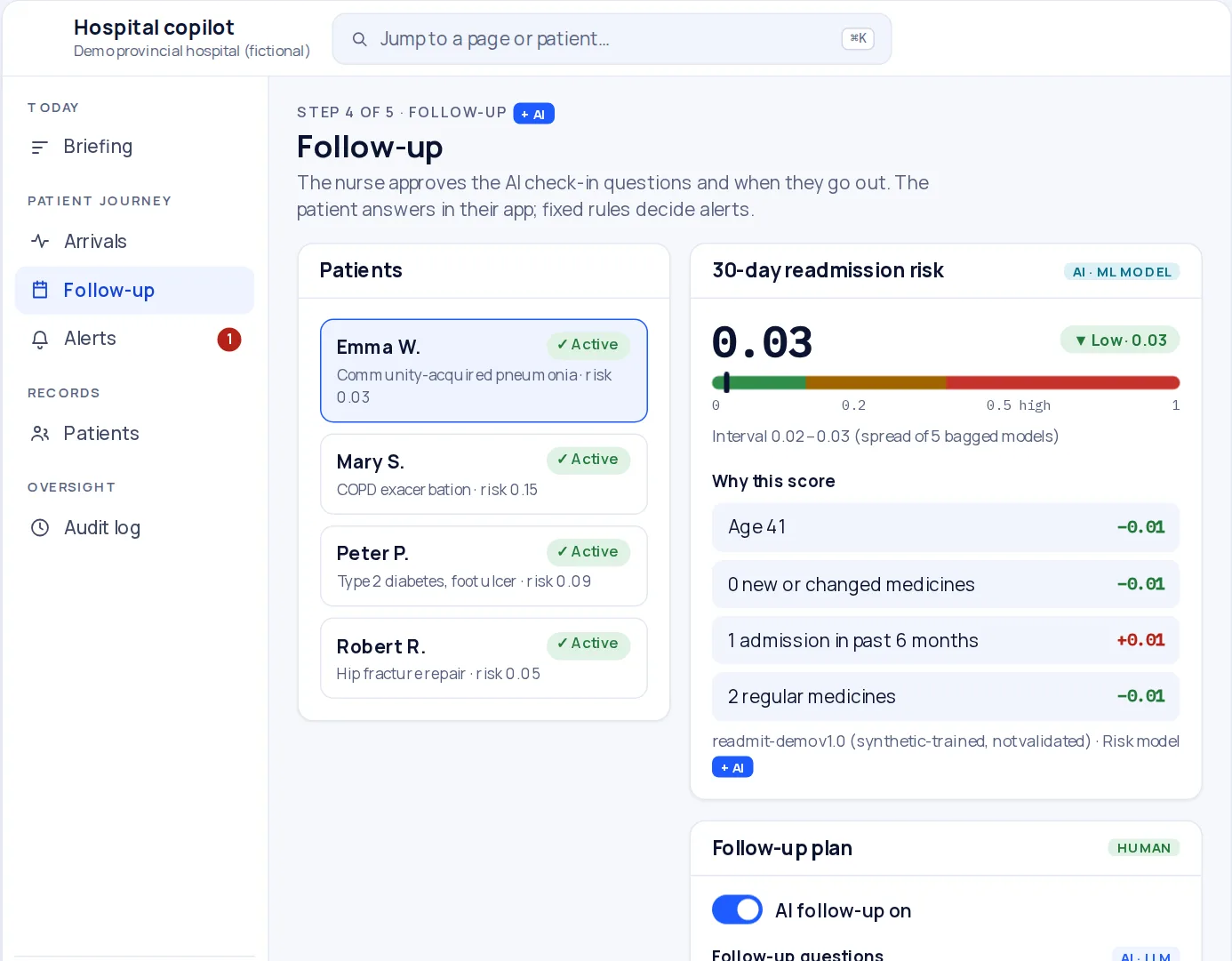
Follow-up at home
Discharged patients are followed at home, so the few who are getting worse are found early.
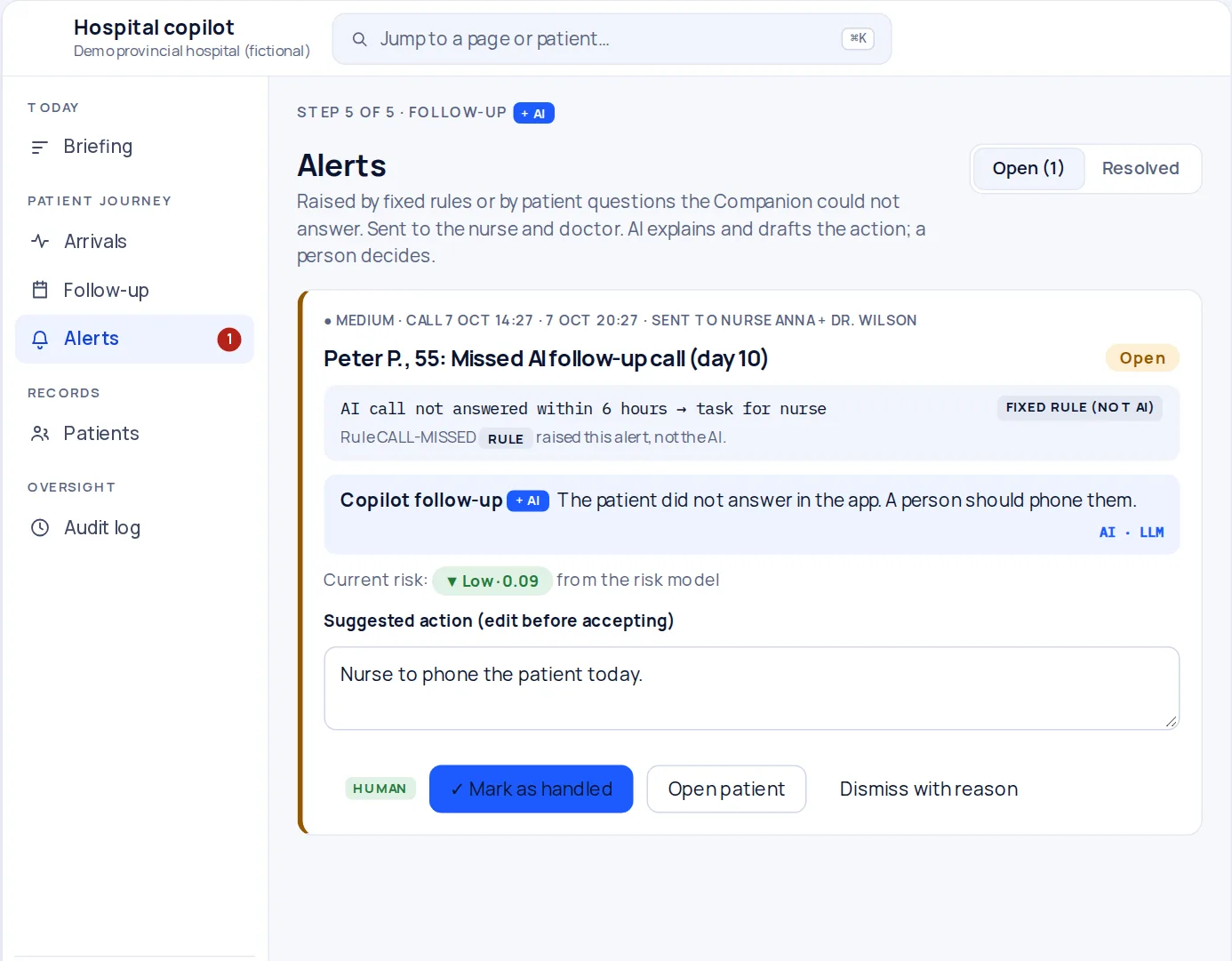
Alerts and audit trail
Every alert and every decision is recorded with the name of the person who made it.
Fixed rules set the urgency level, not the language model. A named nurse or doctor confirms every step, and patient records are treated as sensitive personal data.
The Finished Build
What We Delivered
Where It Stands
Data shown in the screens: Synthetic patients.
Facing a Similar Challenge?
Tell us what you want to solve. We will walk you through this build on a call and scope the same approach on your own data.
Built by Groovy Web • A person approves every action