
AI Legal Assistant
How we built an assistant for legal officers that researches legislation and judgments, analyses contracts and official letters, checks regulatory obligations and studies cases. It cites the section behind every point, in Thai and English.
The Right Text Is Hard to Find and Hard to Trust
Legal work depends on finding the right text and being able to trust it. Statutes, regulations, contracts, opinions and case files sit in different places, and an answer without a source cannot be relied on.
The brief was to bring that scattered picture into one place, and to do it without taking the decision away from the people responsible for it.
- Legal officers
- Contract reviewers
- Compliance teams
- Lawyers who sign off
Manual Work vs Generic AI vs Our Build
We designed the AI to support the people doing the work, not to replace their judgment. It reads the data, explains what it found and drafts the next step. A person makes the call.
| Aspect | Manual Process | Generic AI Chatbot | Our Build |
|---|---|---|---|
| Data | Spread across separate systems | Only what someone pastes in | Sources brought into one view |
| Decisions | A person, with part of the picture | The model answers, nobody signs off | A named person approves every action |
| Explanation | Varies by who you ask | Hard to trace | Every suggestion shows its reason |
| Fit | Familiar, but slow | Not built around the workflow | Built around 4 real workflows |
Cited Answers Across Four Kinds of Legal Work
From a question to a cited answer. We built each workflow to end with a named person's decision. This is one of them, step by step.
Legal officer
Asks in plain words, in Thai or English.
AI retrieval
Searches legislation and judgments and ranks the passages that matter.
AI agent
Answers under fixed headings, with a numbered citation on each point.
Legal officer
Opens the cited sections and reads the points to verify.
Outcome
The research is kept on file and can be copied and rated.
Legal research
A plain-language question returns the governing sections, supporting judgments and the points to verify.
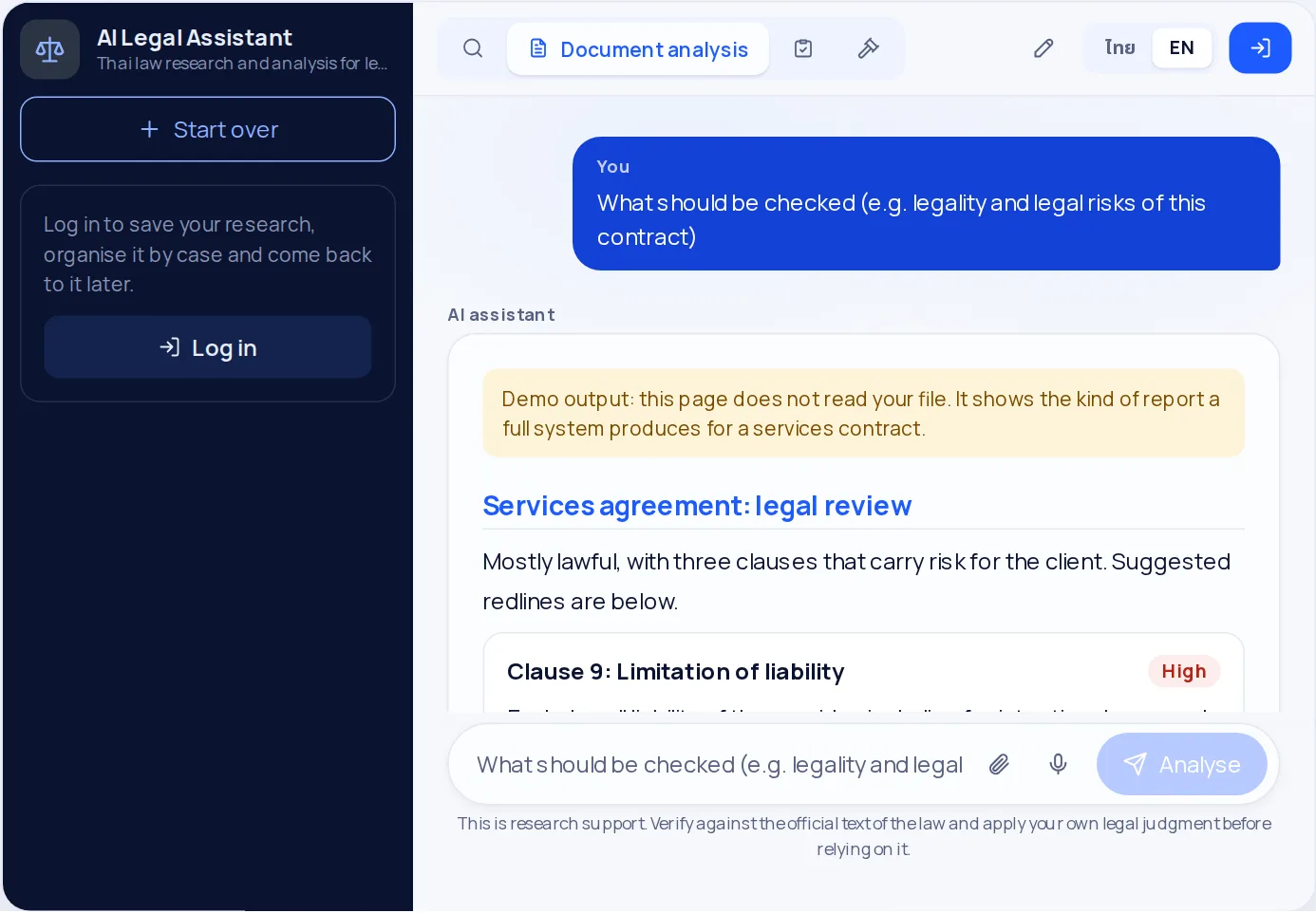
Document analysis
Contracts and official letters are summarised, with obligations, authorities and penalties pulled out.
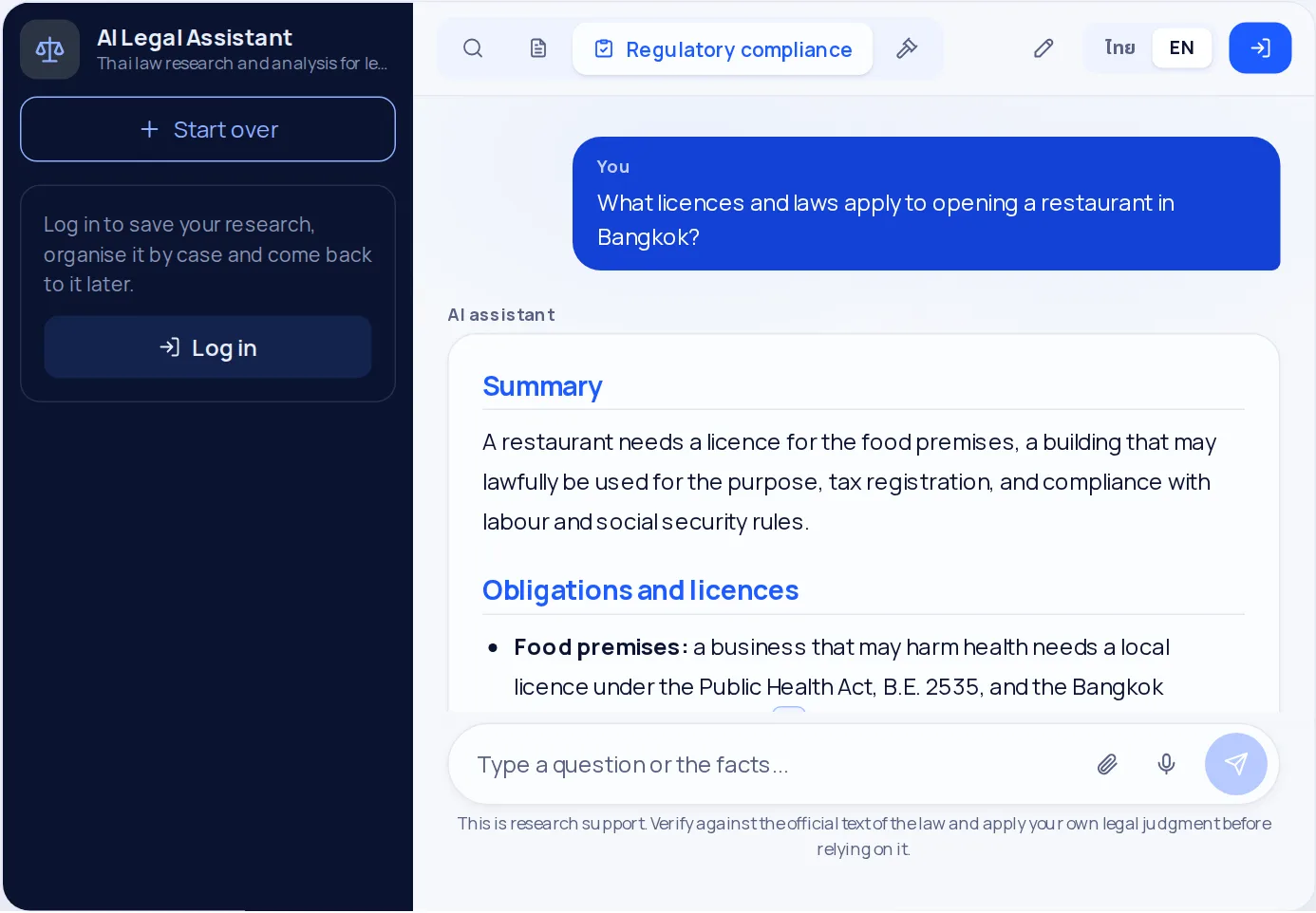
Regulatory compliance
The assistant lists the obligations and licences that apply to an activity, with the source for each.
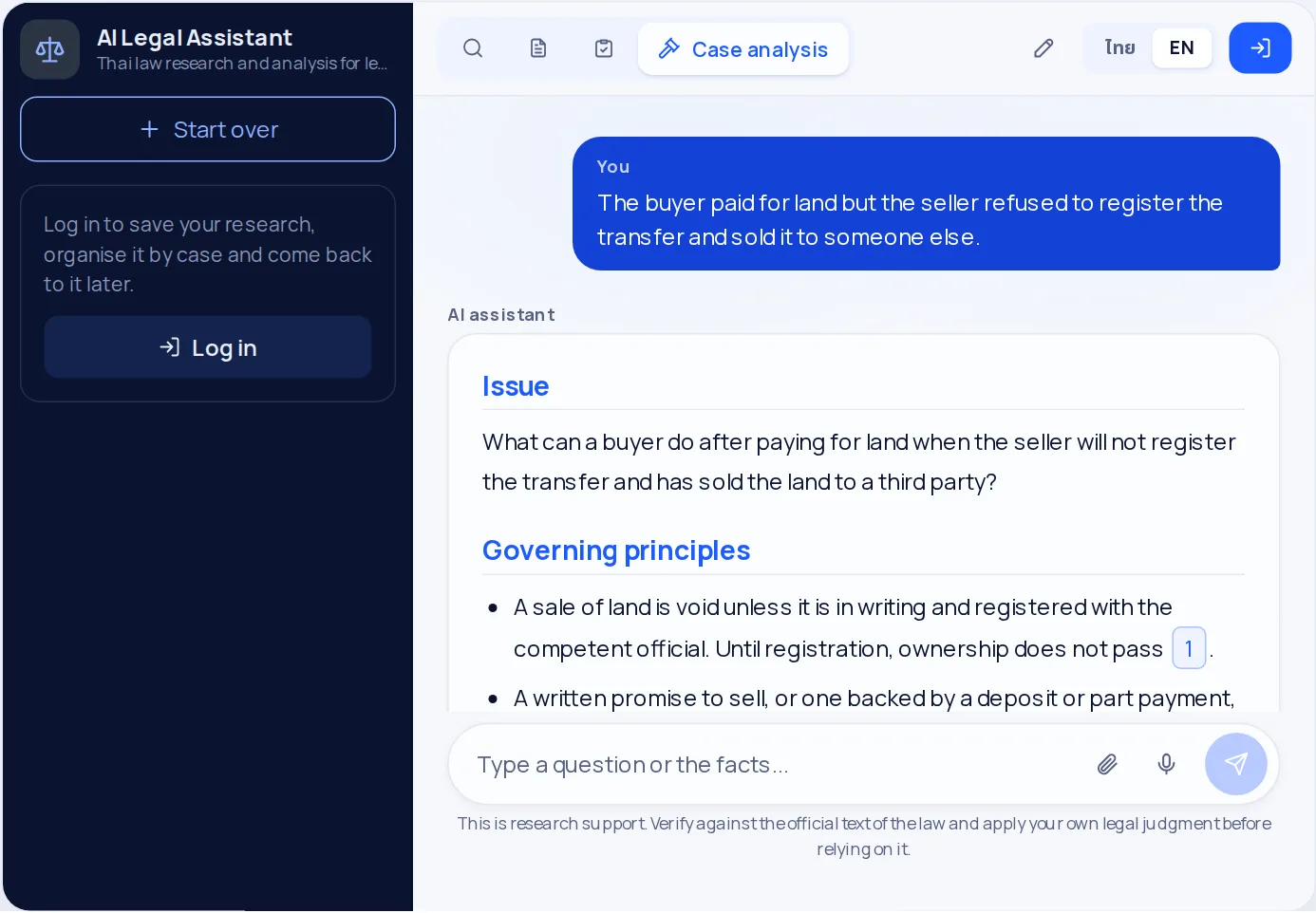
Case analysis
Supporting and contrasting judgments are set side by side, with a likely tendency that is clearly marked as not a ruling.
Every answer shows its sources. The assistant drafts and a lawyer decides. The screens shown use sample answers and are not legal advice.
The Finished Build
What We Delivered
Where It Stands
Data shown in the screens: Sample answers citing real statutes.
Facing a Similar Challenge?
Tell us what you want to solve. We will walk you through this build on a call and scope the same approach on your own data.
Built by Groovy Web • A person approves every action