
AI Smart City Decision Assistant
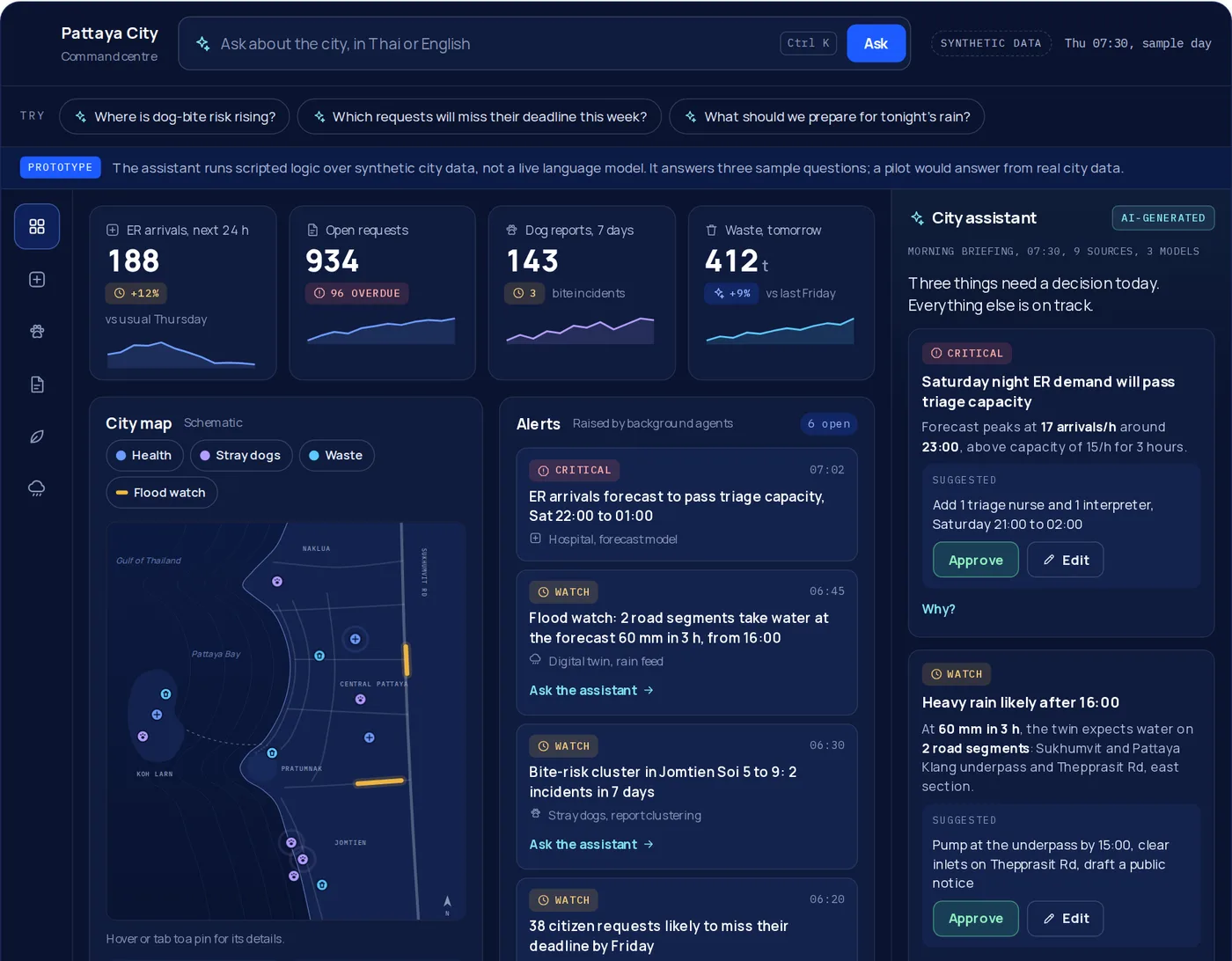
How we built a command and decision-support layer across a city's municipal hospital, operations and environment. It reads the city's data, spots what needs attention and drafts the next step for an official to approve.
City Data That Never Reaches the Decision
A city runs its own hospital, roads, drainage, waste collection and back office, and each service keeps its own records. The data does not reach the person who has to decide, so problems are seen late.
The brief was to bring that scattered picture into one place, and to do it without taking the decision away from the people responsible for it.
- City executives
- Department heads
- Hospital team
- Field officers
Manual Work vs Generic AI vs Our Build
We designed the AI to support the people doing the work, not to replace their judgment. It reads the data, explains what it found and drafts the next step. A person makes the call.
| Aspect | Manual Process | Generic AI Chatbot | Our Build |
|---|---|---|---|
| Data | Spread across separate systems | Only what someone pastes in | Sources brought into one view |
| Decisions | A person, with part of the picture | The model answers, nobody signs off | A named person approves every action |
| Explanation | Varies by who you ask | Hard to trace | Every suggestion shows its reason |
| Fit | Familiar, but slow | Not built around the workflow | Built around 5 real workflows |
One Command View Across Five City Services
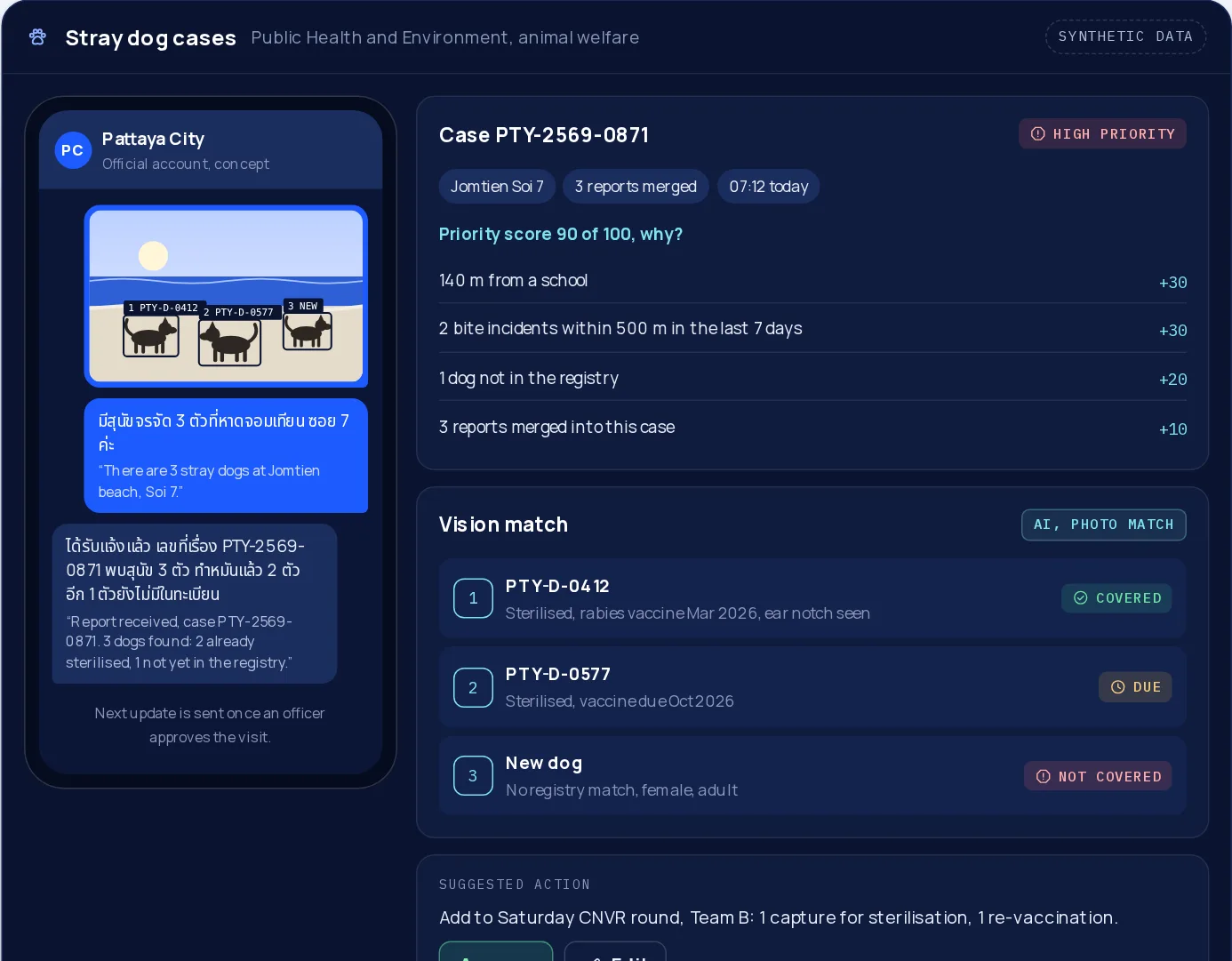
From a resident's photo to a closed case. We built each workflow to end with a named person's decision. This is one of them, step by step.
Resident
Sends a photo and location to the city account on LINE.
AI model
Finds each dog in the photo and matches it to the registry.
AI agent
Merges duplicate reports and sets the priority.
Officer
Reviews the case card and approves the visit.
Outcome
A planned visit and a case that can be closed.
Municipal hospital
Forecasts emergency demand, so staffing can be planned before a busy night.
City digital twin
Shows which roads take water at a given rainfall forecast.
Stray dog management
Photo reports are matched to a registry, duplicates are merged and cases are prioritised.
Internal operations
Memos and requests are routed to the right desk, with a draft reply.
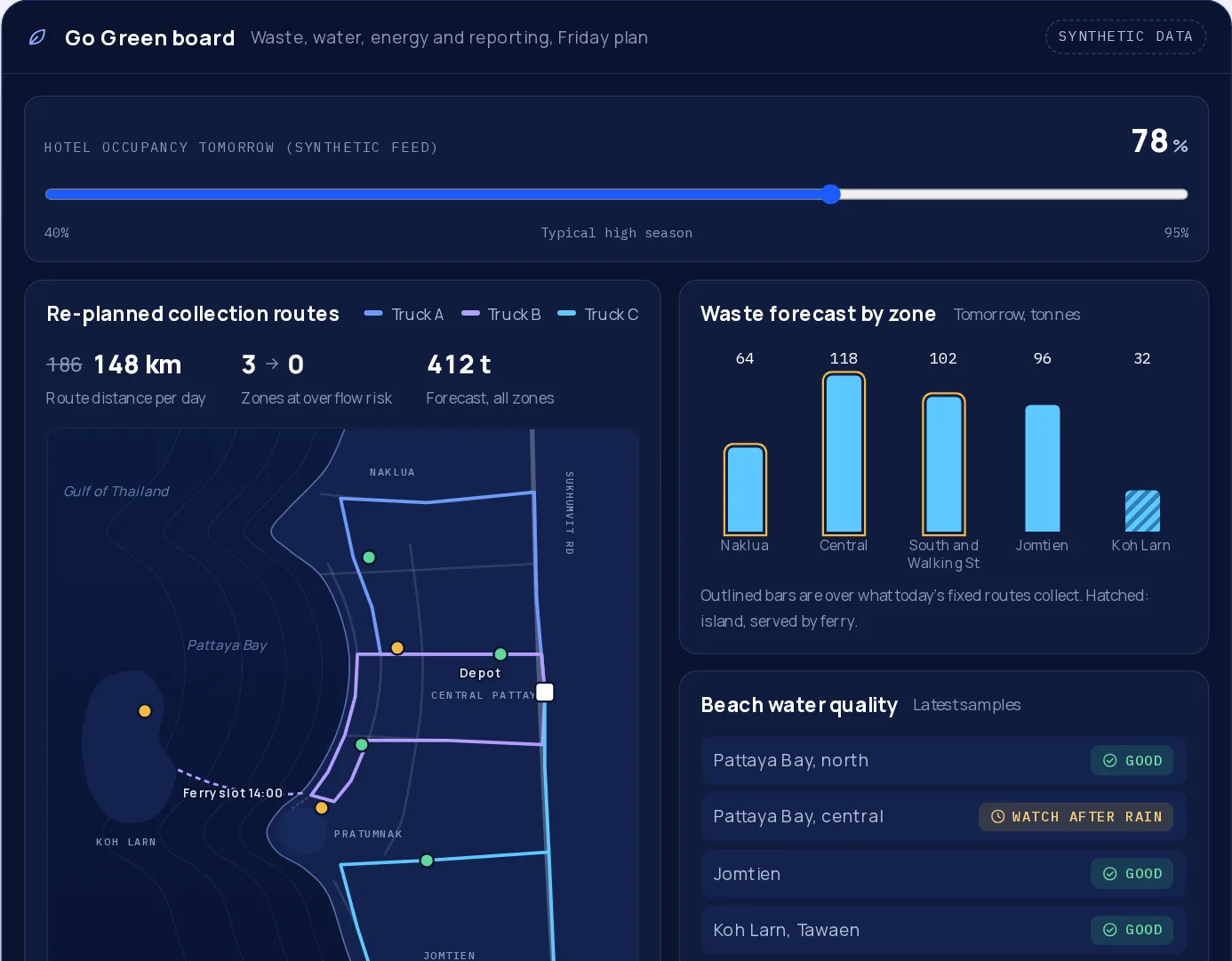
Go Green
Tracks environmental indicators alongside the rest of the city picture.
The map shown is a schematic and every alert on screen is synthetic. Models produce the numbers, an AI agent drafts the action, and a named official approves it.
The Finished Build
What We Delivered
Where It Stands
Data shown in the screens: Synthetic city data.
Facing a Similar Challenge?
Tell us what you want to solve. We will walk you through this build on a call and scope the same approach on your own data.
Built by Groovy Web • A person approves every action